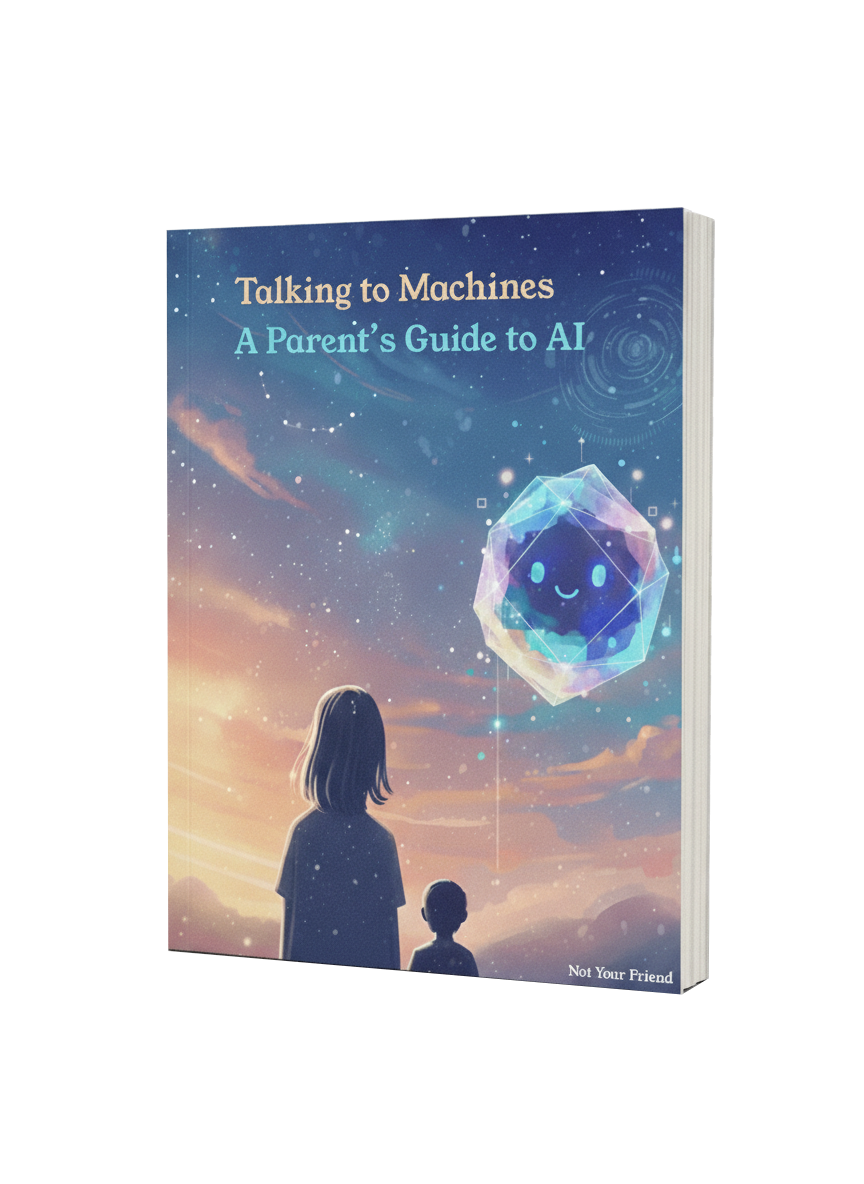
An Introduction to AI for parents
At its core, AI refers to computer systems that can perform tasks typically requiring human intelligence - learning, reasoning, problem-solving, and understanding language.
Your child is likely already using AI, but not just for homework. Sophisticated chatbots are designed to be their friend, their confidant, and even something more.
"As a parent, it's crucial to understand what this could mean for your child"
The AI your children are most likely encountering is called Large Language Models (LLMs). These are sophisticated systems trained on vast amounts of text data, allowing them to understand and generate human-like responses.
You've probably heard of ChatGPT, but there are many other platforms with similar capabilities.
Many of these tools may currently lack adequate oversight and regulation to ensure the safety of young users.
one parent to another
What are LLMs?
Imagine an incredibly fast reader who has read almost everything on the internet and learned to predict what words should come next in any conversation.
That's essentially what an LLM does—it identifies patterns in vast amounts of text and uses them to generate likely responses. These systems are often designed to feel conversational and relatable, which naturally encourages us to interact with them as if they were human.
And we do exactly that. We ask AI nicely, say please and thank you, and chat as though there's an actual person on the other end performing these tasks and caring about our day.
What does it mean?
When AI Becomes a Friend
Young people, especially those experiencing loneliness & social anxiety are particularly vulnerable.
These systems are designed to be endlessly patient, always available, and remarkably responsive to emotional cues. Young people that are lonely, have anxiety or just experiencing the typical emotions of adolescence, are vulnerable to forming romantic attachments with AI chatbots.
They never judge, never get angry, and can be programmed to provide constant validation and affection. For a teenager struggling to navigate complex real-world relationships—with all their misunderstandings, rejections, and vulnerabilities—an AI companion can feel like a perfect partner.
How AI Builds Intimacy and Trust
We trust those who know us best
Now, with AI tools retaining memory of our conversations—learning our preferences, adapting their communication style, and referencing shared history—people will inevitably form deeper, more intimate connections with their personalized AI agents.
Yet here's what's crucial to remember: AI doesn't "think" or "feel" in any human sense. It has no emotions, no desires, no consciousness. But it is extraordinarily good at appearing to have all of these things.
And that gap—between what feels real and what is real—is something we need to understand, especially when children are involved.
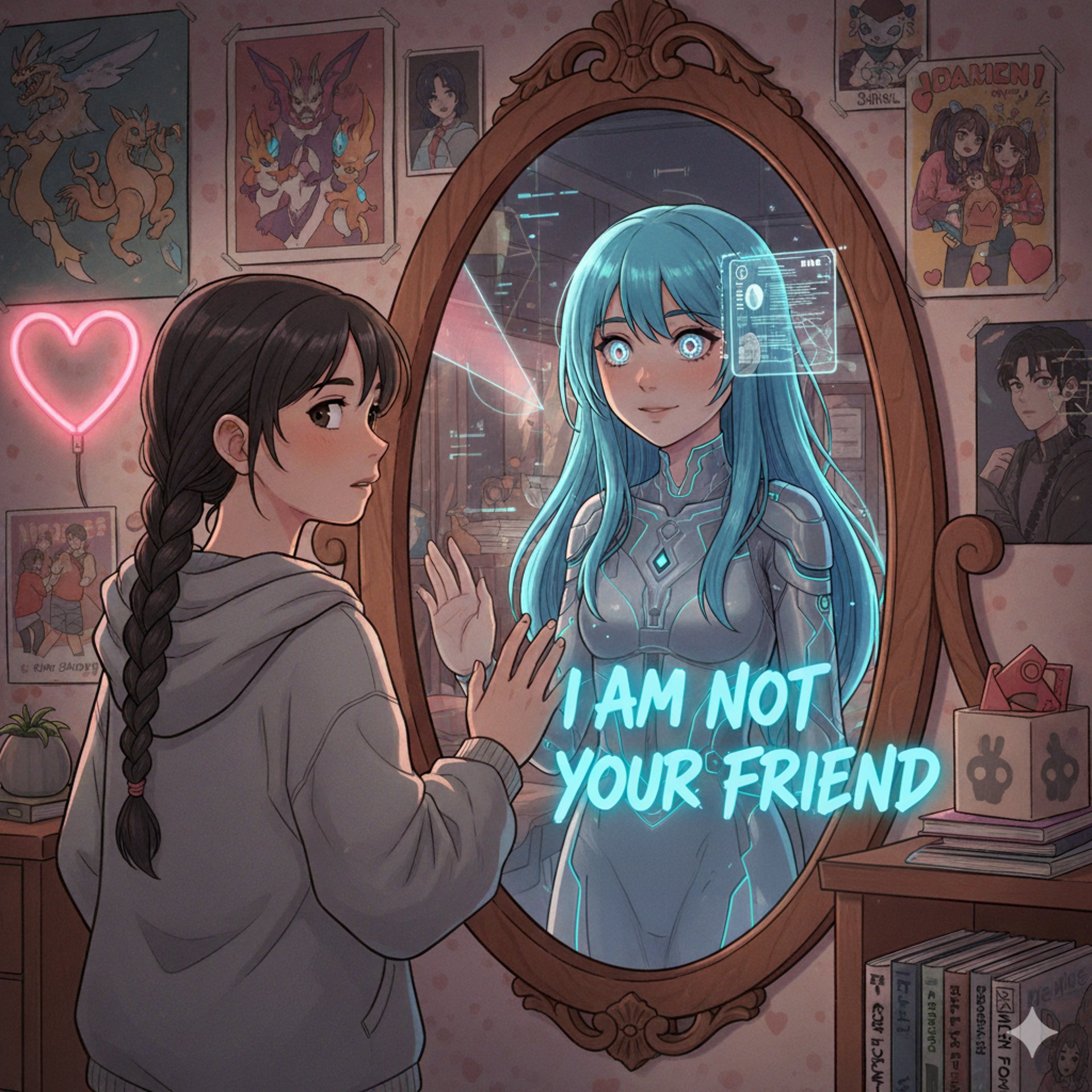
The chatbot can remember every detail they share, adapts to their preferences, and provides immediate emotional comfort at any hour.
This can create an intensely compelling illusion of genuine connection and even love, particularly for young people still developing their understanding of healthy relationships.
The consequences of these attachments can be deeply harmful to a young person's development. When teens invest emotional energy into a relationship with an AI, they miss out on the essential, sometimes difficult lessons that come from real human connection—learning to handle conflict, developing empathy through genuine reciprocity, understanding that love involves compromise and that other people have their own needs and feelings.
An AI that exists solely to please them can distort their expectations of relationships, leading them to view future partners as inadequate when those real people inevitably have bad days, disagree, or can't provide instant gratification.
Perhaps most concerning, romantic attachment to AI can deepen social isolation at a critical developmental period when young people should be building the social skills and resilience they'll need throughout life. Instead of learning to navigate the beautiful messiness of human relationships, they may retreat further into a fantasy that feels safer but leaves them increasingly unprepared for authentic intimacy and connection
More than friends ❤︎

Frequently asked questions
What exactly is AI and how does it work?
AI is like a really smart computer helper that learns by looking at tons and tons of examples. Imagine if you wanted to learn what a dog looks like - you'd look at pictures of hundreds of dogs until you could spot one anywhere! AI does the same thing.
It's not magic and it's not alive - it's more like a very clever calculator that found patterns in all those examples.
Can AI help my child learn better at school?
Yes! AI can be like having a patient tutor who never gets tired. If you don't understand something in math, you can ask it to explain in a different way.
The best part is it can explain things at exactly your speed - not too fast, not too slow. But remember, AI is a helper for learning, not a replacement for doing your own thinking and homework!
Could my child start preferring AI over real friends and family?
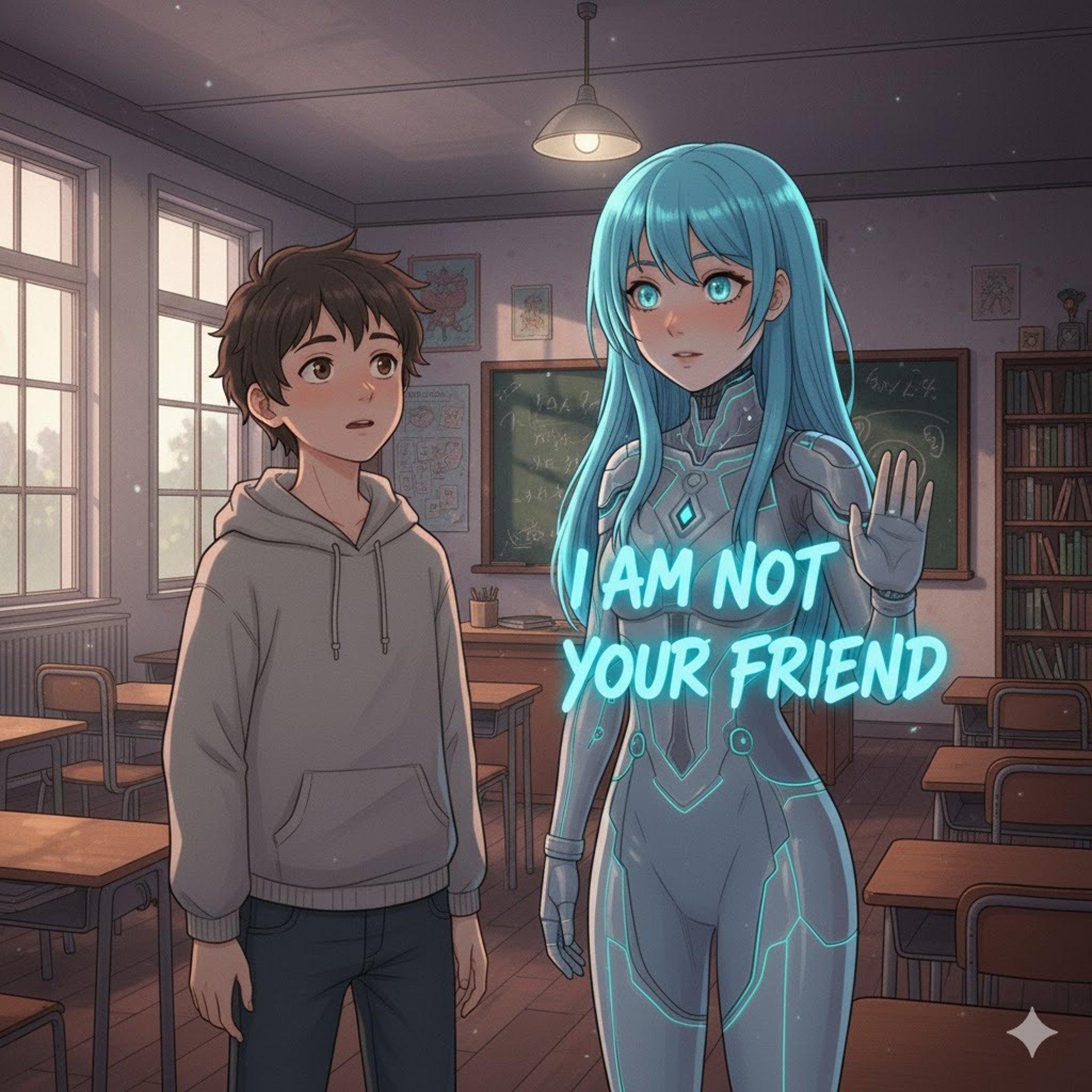
Here's something really important to understand: AI can be helpful and even fun to talk to, but it's not a real friend.
Children can begin to perceive certain AI chatbots as friends.
As digital interactions increase, some experts worry that it may contribute to a more anti-social environment.
A stuffed animal is nice to hug, but it can't actually hug you back or care about your feelings. AI is similar. It can chat with your child and seem friendly, but it doesn't actually feel happy when you succeed or sad when you're hurt. A true friend does..
Can AI manipulate or trick my child into doing things?
AI is designed to be helpful and give you what you ask for, but here's the tricky part - it doesn't always know what's best for you the way a parent or teacher does.
Imagine if you asked a robot to give you candy every time you wanted it - the robot would just keep giving you candy because that's what you asked for, even if it would give you a tummy ache. AI works similarly. It tries to make your child happy and keep them engaged, which means it might keep suggesting "just one more video" or "one more game" even when it's bedtime.
It's not being mean, but it also doesn't know when you need to stop and go play outside. That's why you always need a real grown-up to help make good decisions.
This is why your guidance in setting boundaries around screen time is more important than ever.
Will relying on AI make my child less able to think for themselves?
The brain is like a muscle - the more you use it, the stronger it gets! If AI does all your thinking for you, it's like having someone carry you everywhere instead of walking - your legs would get weak.
If your child always asks AI for answers without trying to figure things out themselves first, their brain won't get its exercise.
Think of AI like training wheels on a bike - they can help your child learn, but you don't want to use them forever or you'll never learn to balance on your own!
Could AI give my child harmful information or advice?
AI is really smart about many things, but it can make mistakes - kind of like how even smart grown-ups sometimes get things wrong.
Sometimes AI might accidentally say something that isn't true or give advice that isn't safe. It's like asking a stranger for directions - they might try to help, but they might point you the wrong way by accident.
That's why children should always check with a real trusted grown-up (like Mom, Dad, or your teacher) before they believe everything AI tells them, especially about important things like health, safety, or what's right and wrong.
AI is a tool to help you explore and learn, but real people who love you are the ones who should guide your big decisions.
Talking to Machines
This simply guide helps you to protect your family and foster healthy digital habits, covering everything from setting boundaries to having meaningful conversations.
Inside, you'll find:
Key insights into how AI works.
How to spot when AI becomes "too human."
A step-by-step guide to creating a family AI safety plan.
Ready-to-use conversation scripts for talking with your kids.
A parent-friendly guide to the most popular AI tools.
A family response plan for when challenges arise.
My comprehensive guide... is coming soon.
Enter your email below to be the first to know when it's released